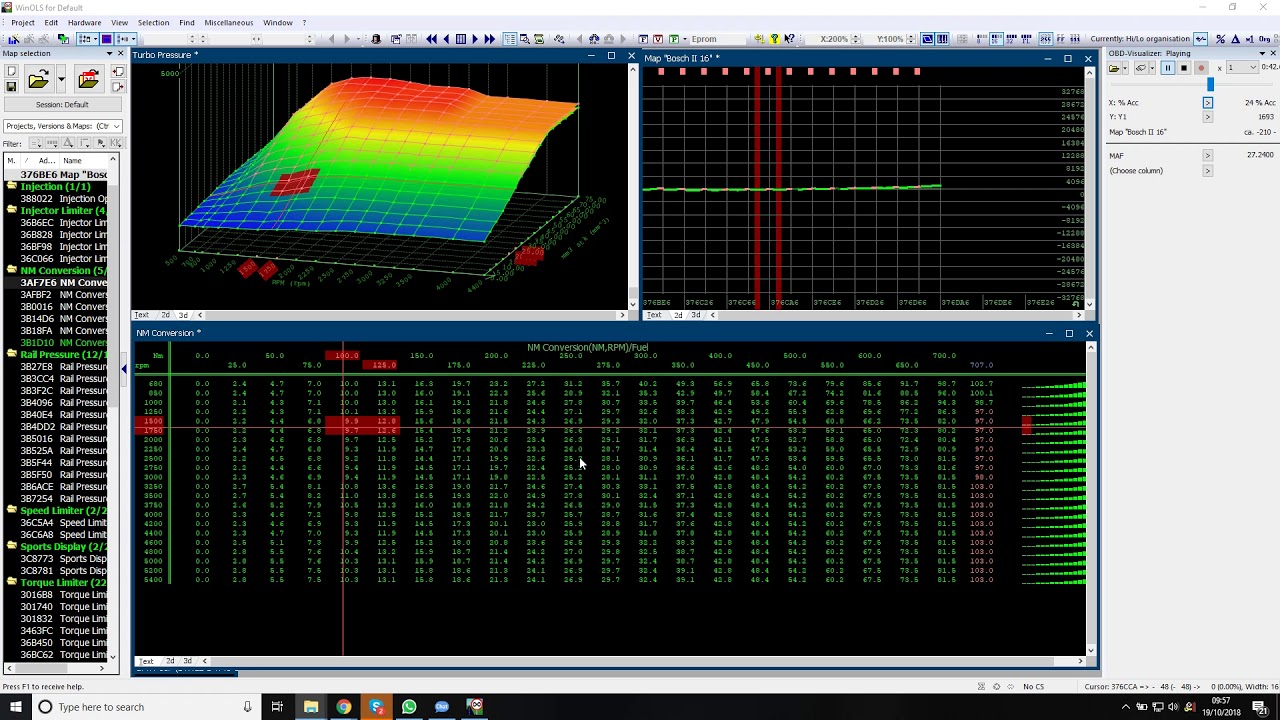

A remap changes the software the engine control unit uses to decide fuel, air, ignition and torque. The engine, the turbo and the exhaust hardware stay as they are unless you have asked for something else.
Manufacturers leave headroom in a calibration. The same engine has to start in a cold climate, run on a range of fuels, and pass the emissions test it was built for. A calibration written for one car uses some of that headroom after the car has been checked. It is not a new turbo, and it is not a promise of a set miles-per-gallon figure. Some engines use less fuel afterwards. That depends on the car and how it is driven, and we do not quote a gain in advance.
What is being edited
On a turbocharged car the maps that matter are usually the ones that set requested torque, boost, fuelling and the limits that protect the turbo, the gearbox and the exhaust treatment. A diesel also has to keep the particulate filter and, where fitted, the AdBlue system inside the temperatures and flow they were designed for. A petrol car has to keep the catalyst and the knock control honest. Raising one number and ignoring the limits around it is how a file feels sharp for a week and then does not.
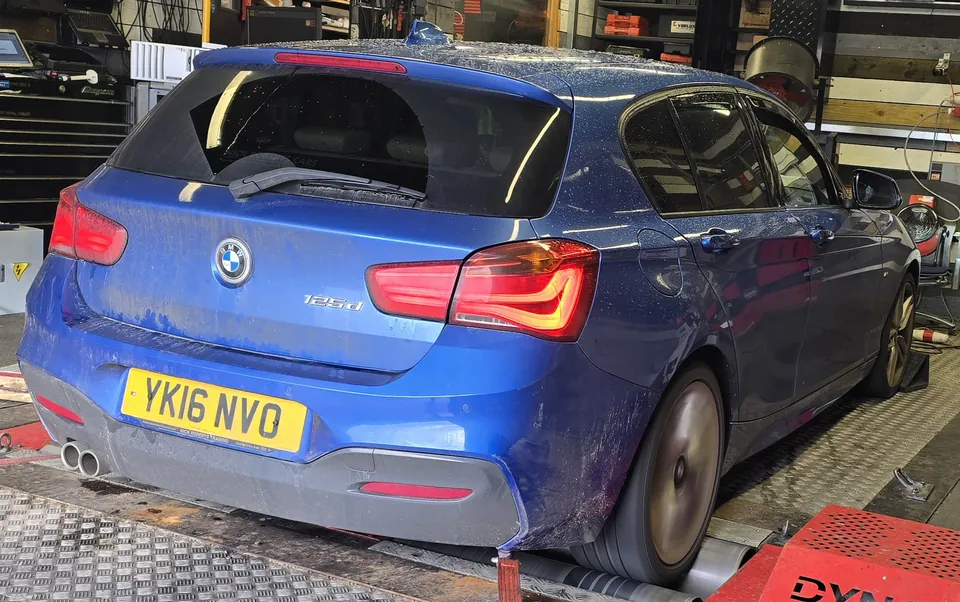
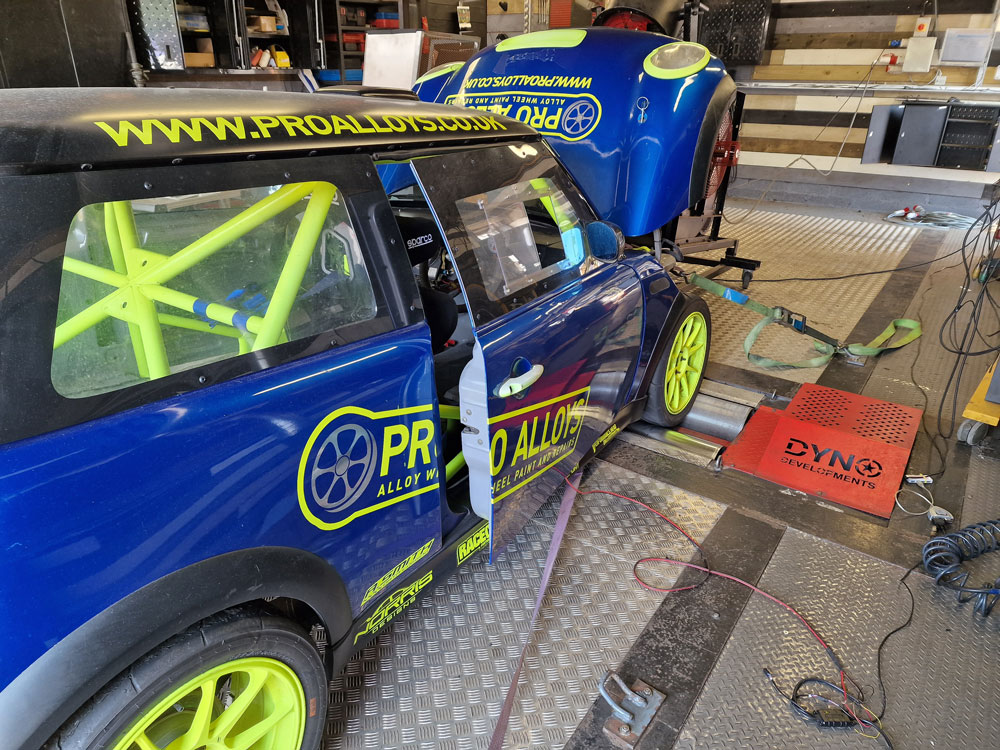
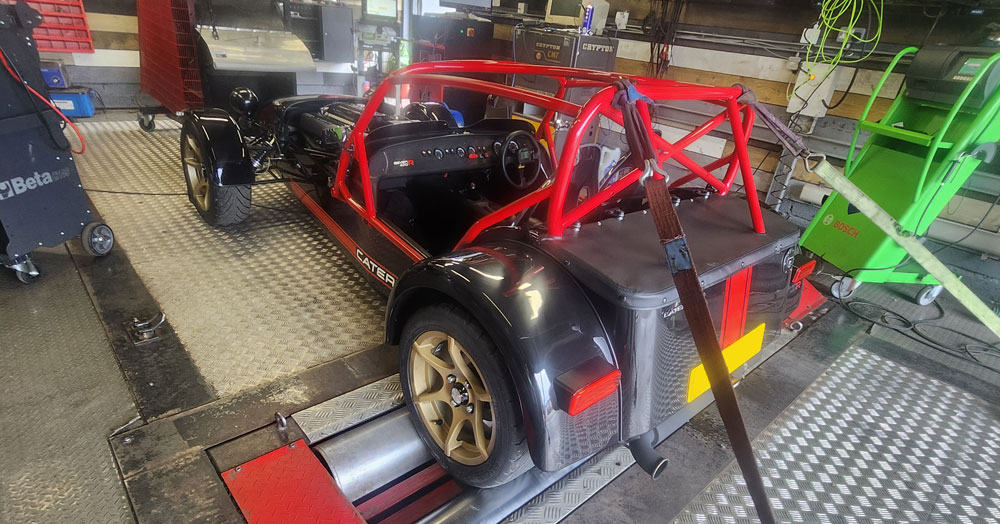
The car stays at Llandow while that is checked. We have calibrated at the workshop beside Llandow circuit since 2004. The rolling road is there so we can see how the engine answers, not so we can print a headline figure from a different vehicle and paste it onto yours.
What it does not change
A remap does not repair a boost leak, a worn clutch, a blocked filter or a sensor that is already lying. If the car is unwell, the file will ask a tired part to work harder. That is why the first question is the health of the car, not the peak number on a forum.
Stage 1 and Stage 1+ are calibrations for a suitable standard car. Stage 2 is for a car that already has supporting hardware. The published starting prices, and what each stage does and does not require, are on the remapping page. For the figure on your registration, check the car.