
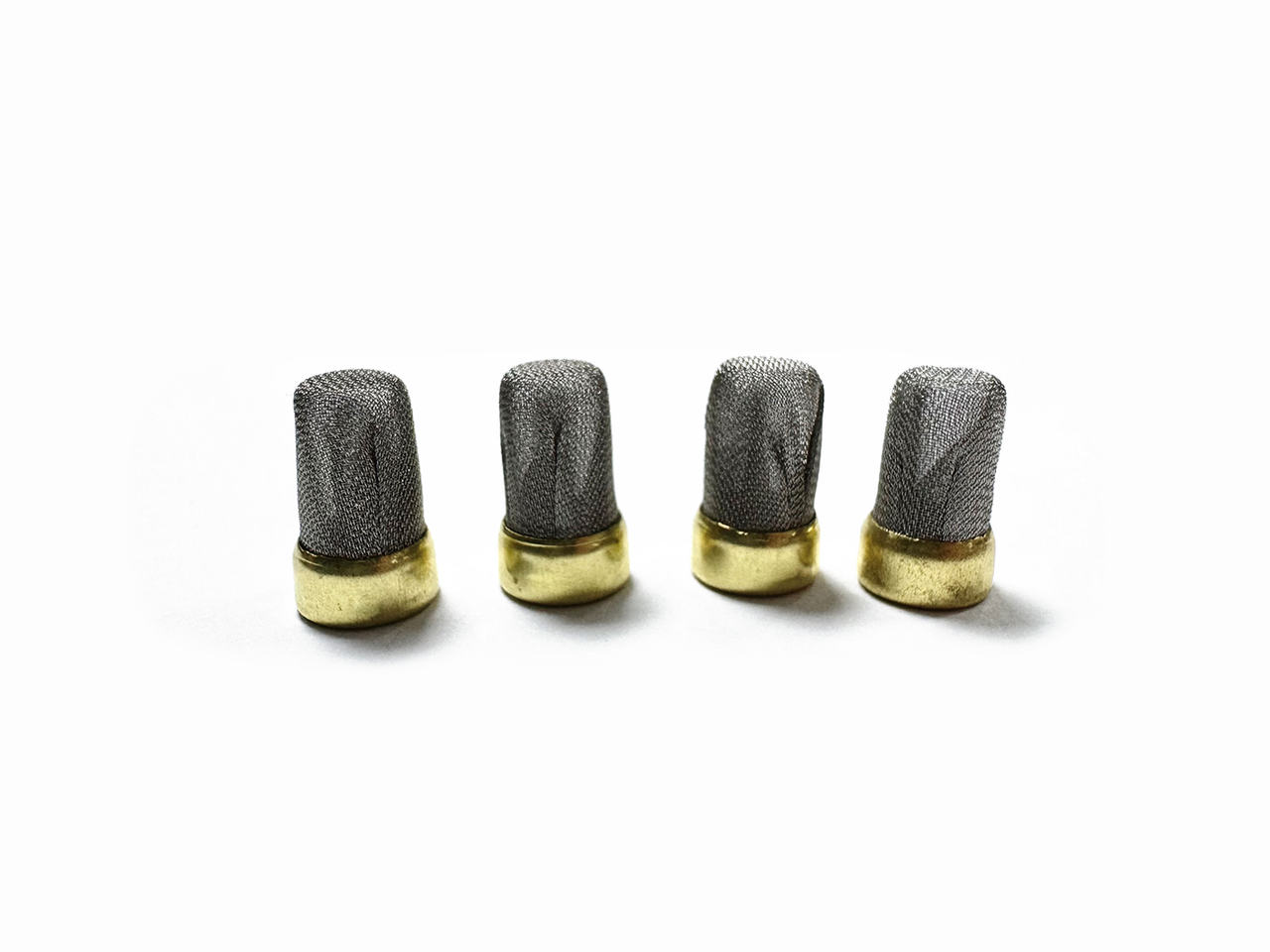
Why VW GDI Injectors Go Bad
Volkswagen and Audi direct-injection petrol engines can be fantastic when they are right. They make good power, respond well to tuning and, in many cases, are very efficient for what they are.
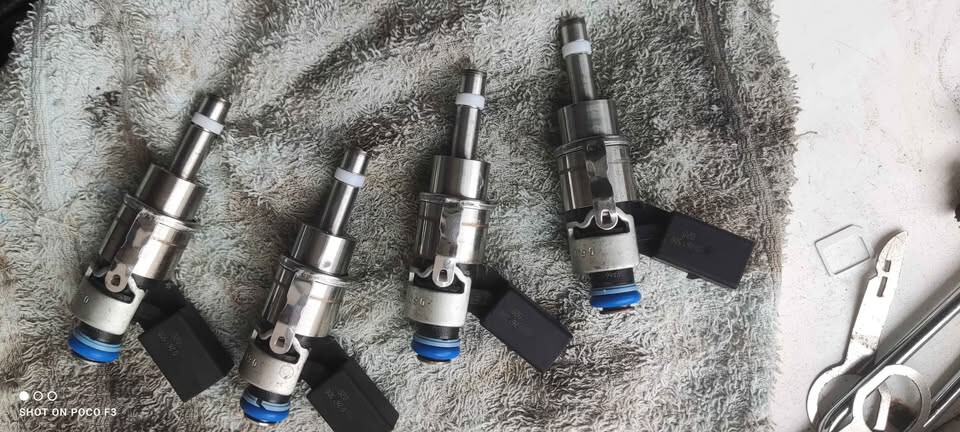
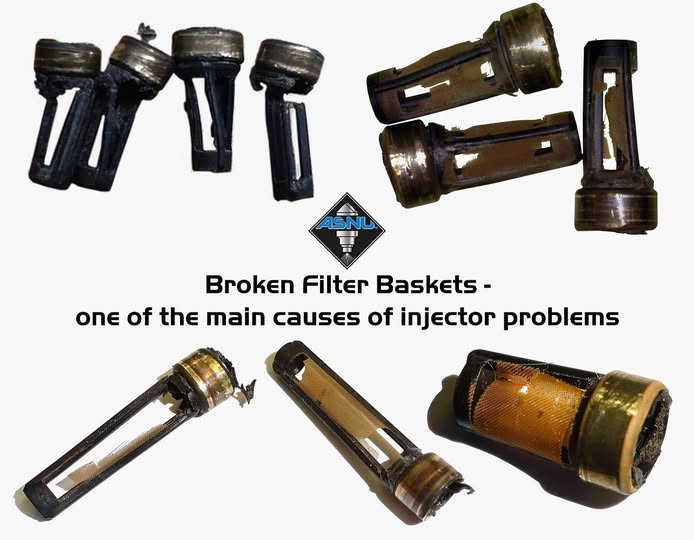
But one weak point that keeps coming up on many VW/Audi FSI and TFSI engines is the injector itself, and more specifically the internal filter basket. Your own EA113 2.0 TFSI page already says this plainly: the injectors on these engines are a known weak point, particularly because the internal filter baskets can deteriorate over time, break apart internally and restrict fuel flow. (tuning.wales)
That is why injector health should never be treated as an afterthought on a VW GDI engine, especially a tuned one.
What happens to VW GDI injectors?
A GDI injector lives a hard life.
Unlike an old-style port injector, it is working at very high pressure and spraying directly into the combustion chamber, so spray quality, sealing and flow balance matter enormously. ASNU's own GDI material explains that the key things to assess are fuel distribution, atomisation and spray consistency, because even small irregularities can affect how the engine runs. (ASNU)
On many VW/Audi direct-injection injectors, the internal basket filter can start to deteriorate. When that happens, several bad things can follow:
- The filter can begin to restrict flow.
- The spray pattern can worsen.
- The injector may no longer match the others properly.
- Debris can move further into the injector.
- The affected cylinder can end up receiving the wrong amount of fuel. (tuning.wales)
That is when misfires, lean running, poor performance and fuel pressure deviations start appearing.

Common symptoms of bad VW GDI injectors
The symptoms are often not dramatic at first.
A failing VW GDI injector can show up as:
- rough idle
- hesitation
- misfires, especially under load
- poor performance
- unstable fuel trims
- harder starting
- fuel pressure deviation faults
- limp mode in worse cases (tuning.wales)
Your own site specifically warns that ignored injector health can lead to lean running, misfires under load, poor performance, fuel pressure deviation and fault codes that can cause the ECU to pull power or enter limp mode. (tuning.wales)
That is exactly why these injectors catch people out. The car may still drive, still idle "well enough," and still make decent power on light use, while one cylinder is already drifting away from the others.
Why the filter baskets fail
The internal basket filter is there to stop debris reaching the injector nozzle and internals. That sounds simple enough, but in real use it has a hard job.
Contamination is one big reason injector systems suffer. Delphi notes that even during repair work, contamination can come from dirt around fittings, tools, hands and the general work environment, and that injector work must be carried out in a very clean manner. Hitachi also highlights that prolonged exposure to dirty fuel and particulates can prematurely blind filters and damage key fuel-system components. (Delphiautoparts)
On the VW/Audi side, your own site goes further and says the baskets themselves are prone to deterioration over time. So it is not just a case of "the injector got dirty"; the filter basket itself can become part of the problem as it ages and breaks down. (tuning.wales)
In practical terms, that means age, heat, contamination and general service life all work against them.

Why they should be upgraded before they fail
This is the important bit.
Most people wait until there is a misfire, a fault code, a drivability issue or a tuning problem. But by that point, the engine has already been running with a compromised injector, and that can be expensive.
If a basket filter starts restricting flow on one injector, that cylinder may run differently from the others. On a tuned engine, where the safety margin is already smaller, that becomes much more serious. Your injector testing page makes exactly this point: once a car has been tuned and the margin for error is reduced, you cannot just assume every injector is still performing correctly at peak RPM and load. (tuning.wales)
So upgrading or servicing injectors before they fail makes sense because it helps avoid:
- one cylinder running leaner than the others
- unstable combustion
- misfires under boost
- poor spray atomisation
- wasted dyno time chasing "mystery" issues
- expensive engine damage if the problem is ignored (tuning.wales)
This is especially true on modified VW and Audi GDI engines.
Why they are really service items
A lot of people still think of petrol injectors as fit-and-forget parts.
On these engines, that is the wrong attitude.
Your own site already advises that before tuning, the injector filters should be replaced at a minimum, or better still the injectors should be tested or replaced altogether, describing this as a critical maintenance step that can save thousands in repair costs. (tuning.wales)
That is really the key message: on many VW GDI engines, injectors are not just components you wait to fail. They should be treated much more like service items, especially on older cars and especially on tuned ones. (tuning.wales)
Not necessarily because every injector is bad right now, but because they are known to age, clog, deteriorate and fall out of balance.
Why they should be tested on an ASNU injector test bench
This is where proper testing matters.
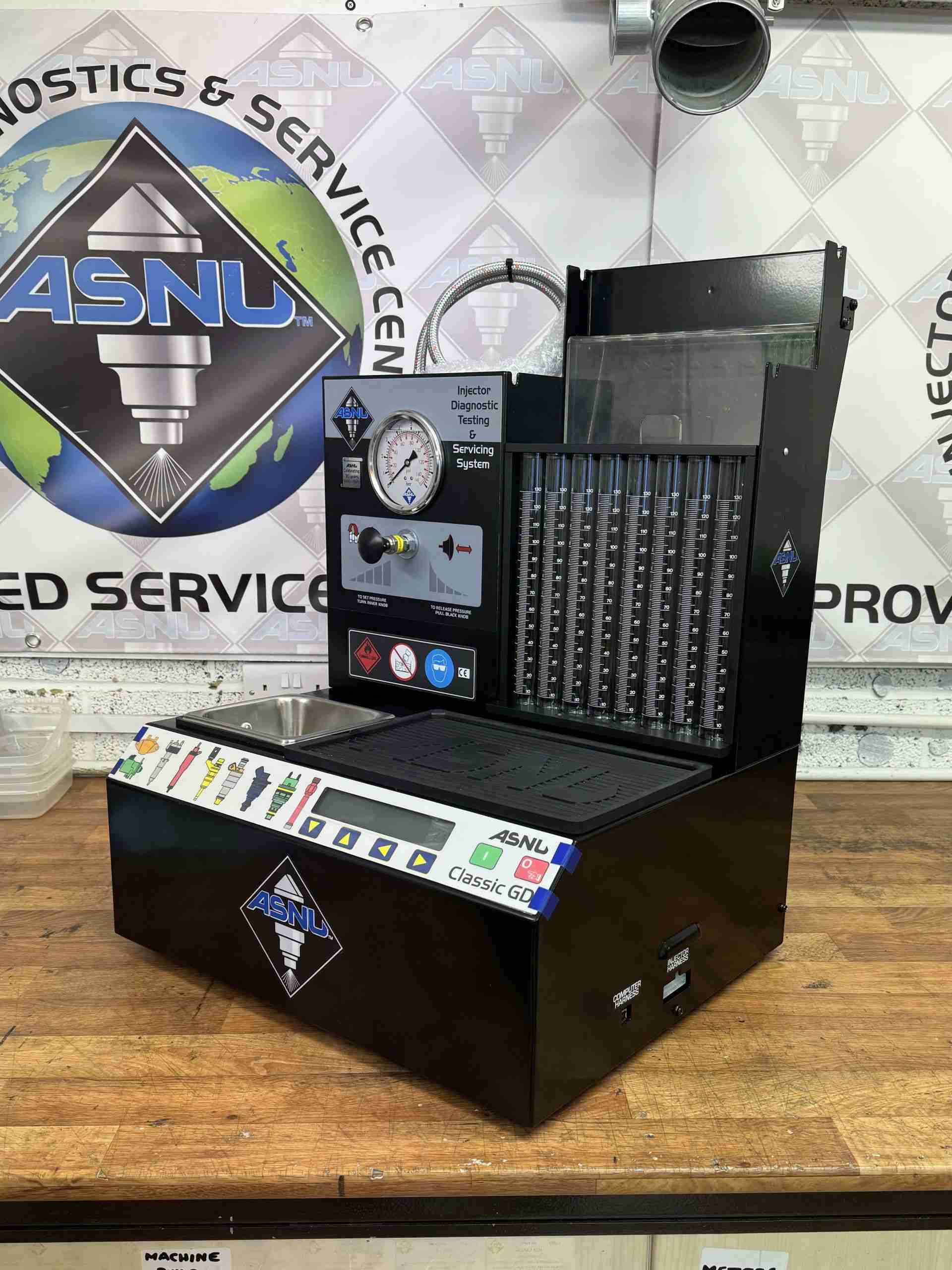
ASNU's GDI systems are designed to examine injector spray pattern, fuel distribution and atomisation safely and in detail. That means you can stop guessing and actually see what the injector is doing. (ASNU)
Your own injector page states that Llandow Tuning has an ASNU injector testing and service machine that can control, flow-test, ultrasonically wash and service most injector types, including GDI injectors, and that you have expanded it in-house with your own control gear to test even more complex injectors. (tuning.wales)
That matters because an injector can be bad in more than one way:
- it may flow badly
- it may have a poor spray pattern
- it may leak
- it may seal badly
- or it may simply not match the others closely enough under load (ASNU)
Without proper bench testing, you are often just guessing.
Why testing beats assumptions
A VW GDI engine can have rough idle, fuel trims, misfires or poor high-load running and people will often jump straight to coils, plugs, carbon build-up or tuning.
Sometimes it is one of those things.
Sometimes it is the injectors.
The problem is that without testing, you do not know. That is why ASNU-style testing is so useful: it lets you compare injector against injector and see whether one or more are no longer doing the job properly. (ASNU)
On a tuned car, that is even more important, because the engine has less tolerance for imbalance.
The bottom line
VW/Audi GDI injectors go bad because they are precision parts working in a hostile environment, and on many VAG petrol direct-injection engines the internal filter baskets are a known weak point. As they deteriorate, they can restrict flow, upset spray pattern and lead to rough running, misfires, poor performance and potentially much worse if ignored. (tuning.wales)
That is why they should not be treated as lifetime parts.
They should be treated as service items.
And if you are tuning a VW GDI engine, injector health should be checked properly, ideally on an ASNU injector test bench, before small problems become expensive ones. (tuning.wales)
KLAUS NIELSEN
22.5K Followers
At the bleeding edge of tuning and ICE development
Motorsports & Fast Road Tuning Specialist
Software Skills: Reverse Engineering - Assembler(IDA Pro - OllyDbg - WinDbg etc)
C/C++ - Pascal - Java - C#/VB.Net - Python - Perl
Experience on PowerPC, x86/64, Motorola, Infineon TriCore etc